
A phishing email gets through. A key employee clicks it. Your team restores access, changes passwords, and gets back to work. But the harder question remains: who determines whether the same issue can happen again, what risk it created, and which security investment should come next? That is where the answer to what is a virtual CISO becomes practical for a growing business.
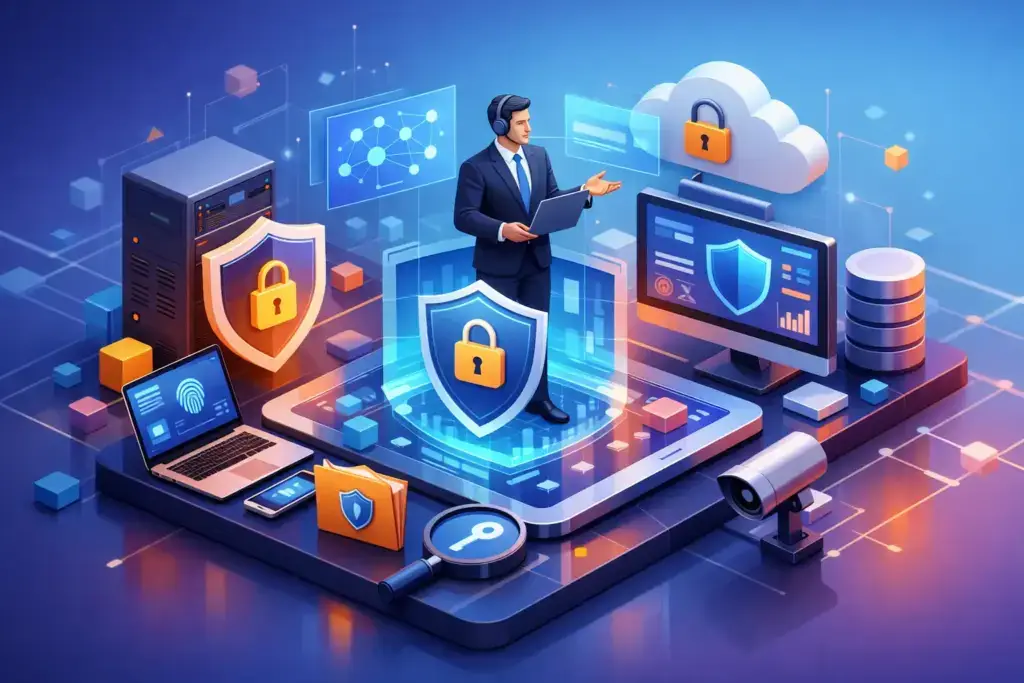
A virtual chief information security officer, or vCISO, is an outsourced cybersecurity leader who provides executive-level security direction without the cost and commitment of hiring a full-time CISO. They help an organization understand its risks, set security priorities, build policies, prepare for compliance requirements, and make defensible decisions about technology.
For small and mid-sized businesses, a vCISO fills a common gap. You may have dependable IT support and useful security tools, but no one owns the larger security strategy. A vCISO brings that ownership, translating cyber risk into clear business decisions leaders can act on.
What Is a Virtual CISO Responsible For?
A vCISO does not simply monitor alerts or fix employee laptops. Those are valuable technical functions, often handled by an internal IT team, an MSP, or a security operations provider. The vCISO works at a different level: governance, risk, priorities, accountability, and long-term planning.
Their first job is usually to establish a realistic picture of the business’s current security posture. That includes reviewing identity and access controls, endpoint protection, backups, email security, network configuration, cloud services, vendor exposure, employee practices, and incident response readiness. The goal is not to create a frightening report full of technical jargon. It is to identify what matters most to the business and what should be fixed first.
From there, a vCISO typically develops a security roadmap. That roadmap connects recommendations to business outcomes such as reducing downtime, protecting customer data, qualifying for cyber insurance, meeting contractual obligations, or supporting expansion into a regulated market.
A strong vCISO relationship also includes regular leadership communication. Business owners and operations leaders should not have to guess whether security is improving or where their exposure remains. They need direct answers: What are our top risks? What has been completed? What needs budget approval? What would happen if a vendor, employee account, or critical system were compromised?
Why Businesses Hire a vCISO Instead of a Full-Time CISO
A seasoned full-time CISO is a major investment. Salary, benefits, recruiting time, and the need to support that leader with a security team can put the role out of reach for many organizations with 10 to 450 employees. Even when the budget exists, the business may not need a full-time executive devoted exclusively to security every day.
A vCISO gives the organization access to experienced leadership on a fractional basis. The engagement can be structured around the company’s actual needs: monthly strategic meetings, quarterly risk reviews, compliance preparation, incident-response planning, or more involved guidance during a period of change.
This model also brings outside perspective. Internal teams can become accustomed to workarounds, legacy systems, or informal processes that create risk over time. A vCISO can challenge those assumptions without being disconnected from operational reality. The right advisor does not recommend expensive tools for their own sake. They help leaders decide which controls are necessary now, which can wait, and which investments do not fit the business.
That distinction matters. Security is not a checklist you complete once. It is a continuing management discipline shaped by changing threats, new technology, staffing changes, client demands, and growth plans.
A vCISO Is Not the Same as Managed Cybersecurity
The terms are often grouped together, but they solve different problems.
Managed cybersecurity services focus on execution and protection. They may include endpoint detection, email filtering, vulnerability management, security monitoring, backup oversight, patching, and response to suspicious activity. These services help reduce the chance and impact of an attack.
A vCISO provides the leadership layer around those services. They determine whether the tools and processes align with the organization’s risk profile, establish security policies, measure progress, communicate with leadership, and guide decisions when priorities compete.
For example, a managed security provider may alert you that multi-factor authentication is not enabled for several accounts. A vCISO asks broader questions: Why is that exception allowed? Who approved it? Does it create a compliance issue? What is the deadline to correct it? How will leadership know the issue is resolved?
The most effective approach is often integrated. Technical teams protect and maintain the environment while the vCISO provides the strategy, governance, and executive accountability that keep security efforts focused.
What a vCISO Engagement Often Includes
The exact scope depends on your industry, systems, risk tolerance, and customer requirements. A company handling protected health information, payment data, legal records, or sensitive client information will need a different level of oversight than a business with limited data exposure.
Still, most vCISO engagements include several core areas:
- Security risk assessments that identify gaps and rank remediation by business impact.
- A practical security roadmap with owners, timelines, and budget considerations.
- Policies and standards for access control, acceptable use, remote work, data handling, backups, and incident response.
- Compliance and insurance support for frameworks, questionnaires, audits, and evidence collection.
- Executive reporting that turns technical activity into clear risk and progress updates.
- Tabletop exercises and incident-response planning so leaders know their roles before an emergency.
The deliverables should be useful, not ceremonial. A 70-page policy document that no employee reads does not improve security. A prioritized plan, clear ownership, tested procedures, and consistent follow-through do.
When Does Your Business Need a Virtual CISO?
You do not need to wait for a breach, audit failure, or insurance denial. In fact, waiting until one of those events occurs usually makes the work more expensive and disruptive.
A vCISO is especially valuable when your company is growing faster than its IT processes, pursuing a contract with security requirements, moving more operations into Microsoft 365 or cloud platforms, supporting a hybrid workforce, or managing multiple vendors with no single security owner. It is also a good fit when leadership receives security questionnaires they cannot confidently answer.
Another signal is decision fatigue. If your team keeps purchasing tools reactively, responding to the loudest request, or postponing known issues because no one can explain the business case, you need a clearer security governance process.
For businesses in Southern California and Las Vegas, this often comes up as local companies serve larger enterprise customers, healthcare organizations, financial partners, or government-adjacent clients. Those relationships can introduce more formal security expectations quickly. A vCISO helps prepare before a customer requirement becomes a rushed fire drill.
How to Evaluate a vCISO Provider
Not every technical consultant is equipped to serve as a security executive. Look for a provider that can explain risk in plain language and connect recommendations to your operations, finances, and goals.
Ask how they assess your environment, how often they meet with leadership, and what reporting you will receive. Clarify whether they can support your specific compliance obligations and whether they will help coordinate the work across IT, security, cloud, backup, and outside vendors. If the provider only produces an assessment and leaves your team to interpret it, the engagement may not create the accountability you need.
It is also reasonable to ask how they avoid conflicts of interest. A strategic advisor should be able to justify every recommendation based on risk and business value, not simply because it leads to another product sale.
At Quantum Shield IT, the vCISO role is designed to work alongside managed IT and cybersecurity operations, giving clients one accountable team for planning and execution. That matters when a roadmap calls for changes across identity management, network security, backups, employee training, and vendor controls. Strategy without follow-through creates more documents. Strategy connected to execution creates measurable progress.
The Real Value Is Better Decisions
A virtual CISO cannot promise that your business will never face a cyber incident. No responsible security leader can make that promise. What they can do is reduce preventable exposure, prepare your people to respond, and ensure leadership understands the risks it is choosing to accept.
That is the real value: less uncertainty, fewer surprise costs, and a clearer path from reactive IT decisions to a mature security program. When security has an owner at the leadership table, it becomes easier to protect what the business has built and make growth decisions with greater confidence.
